






Chainsaw trousers
Chainsaw trousers are the go-to choice for a reason: they offer full, all-day leg protection in one reliable, comfortable garment—no shifting panels, no gaps, no compromises. It’s the best-sold style in chainsaw leg protection because it simply works, day after day.
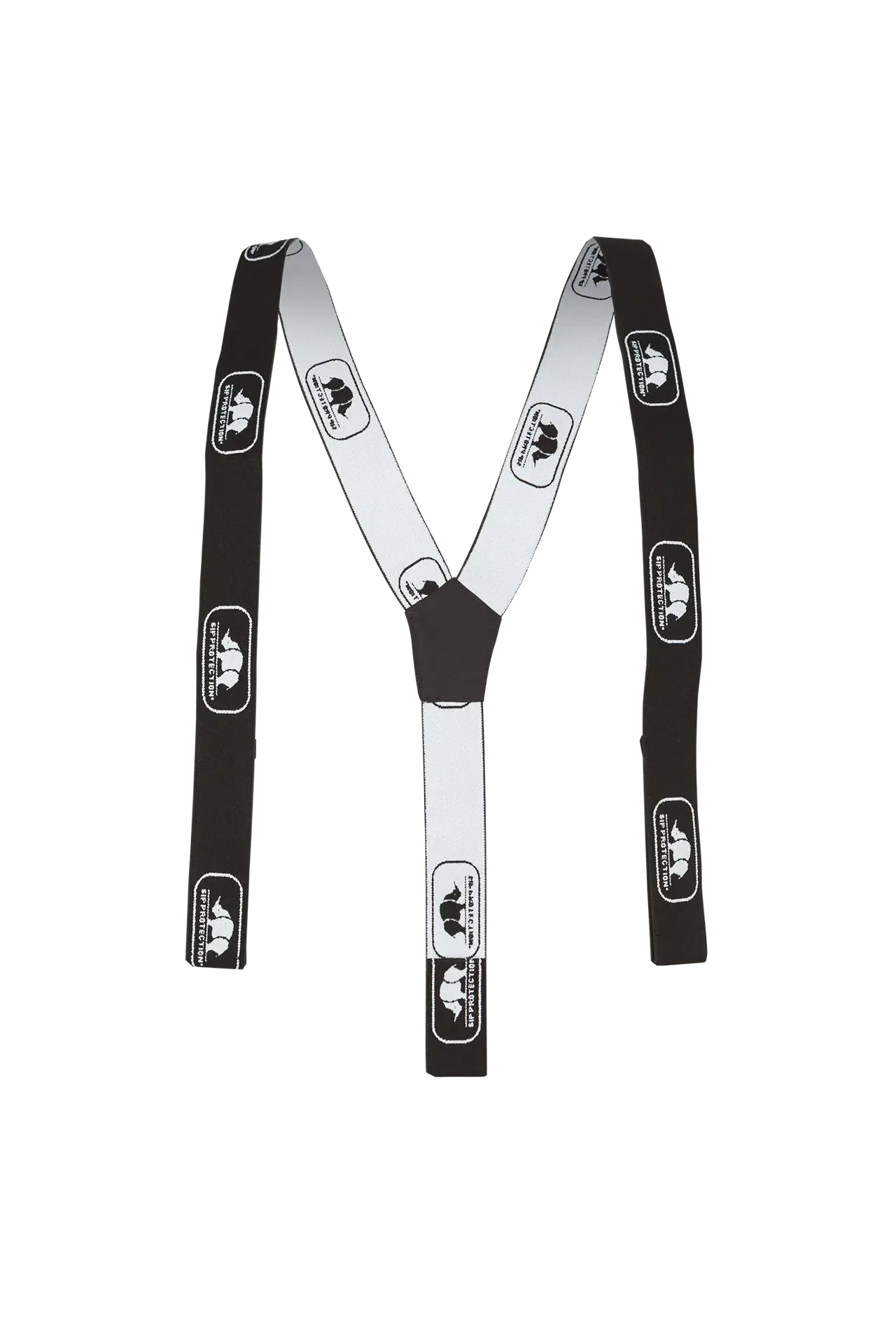
To get the best performance (and the safest fit), pair your trousers with braces (suspenders) or at least a belt. Even the lightest trousers can’t fight gravity, and when chainsaw trousers sit too low, even by a couple of centimetres, the fit changes where it matters most. The crotch drops out of position, your movement starts pulling on the seams, and every bigger step adds extra stress. Over time, that can lead to premature wear or even a broken crotch seam and/or zipper.
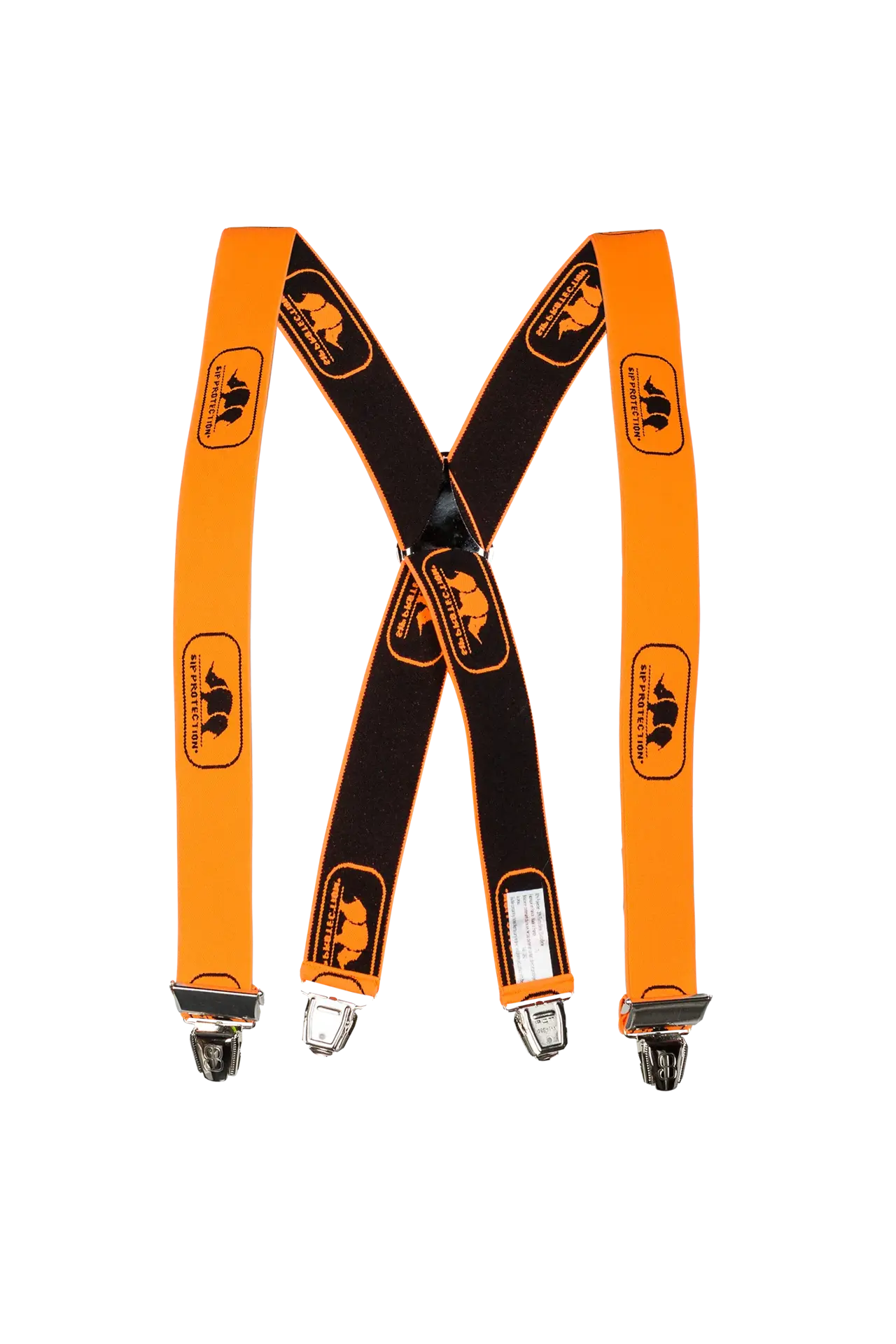
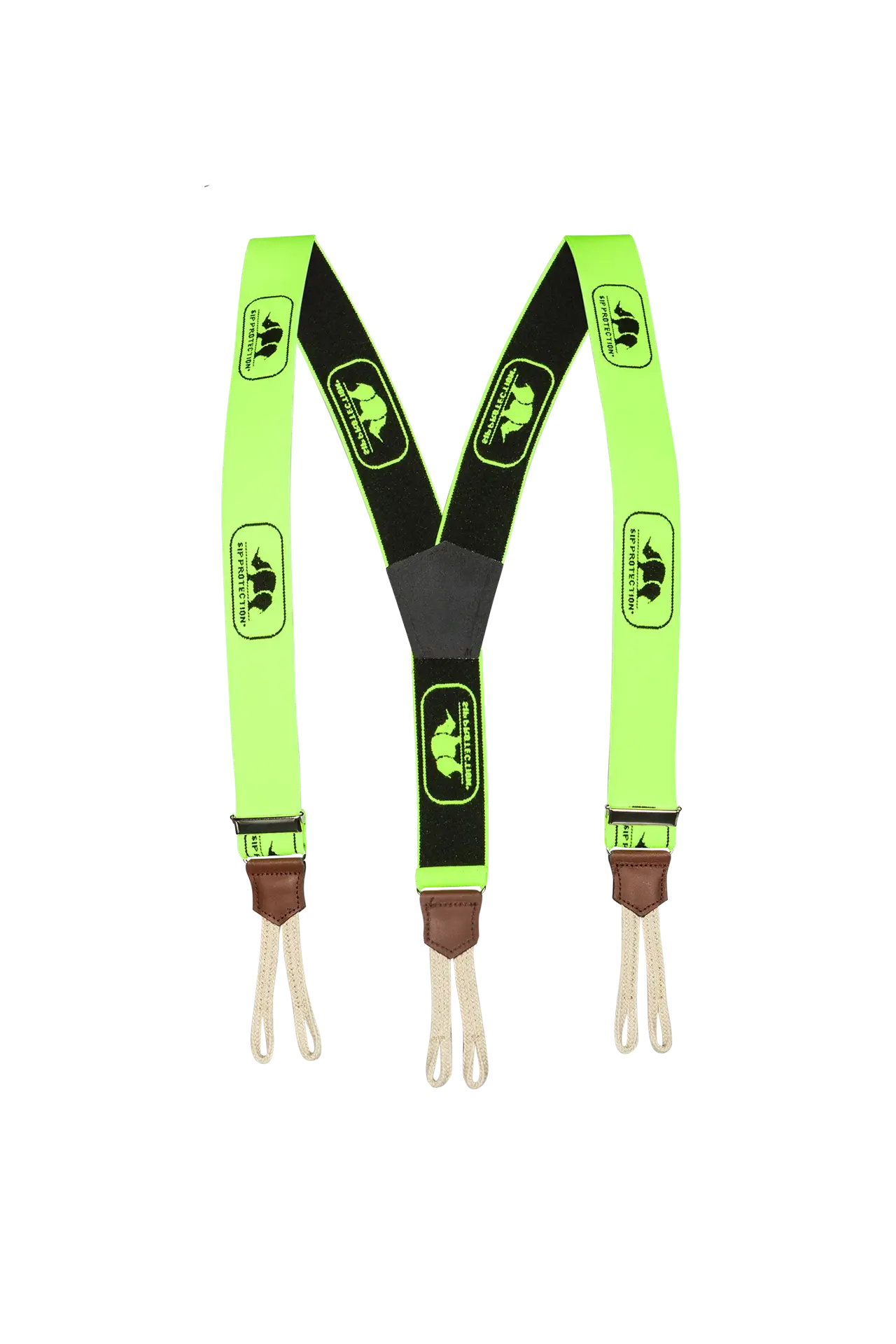
That’s why we strongly recommend braces. They keep your trousers exactly where they’re designed to sit, so the protective area stays correctly positioned and the garment moves with you, not against you. A belt can help, but it may still slide during work. For the most secure, stable and comfortable solution: trousers + braces. Always.

Chainsaw chaps
Chaps have an open back and are secured with adjustable buckles. In the EN ISO 11393 standard, chaps have been introduced as Design B.
Chaps are quick to put on and take off and are commonly used in some parts of the world (for example, the USA). They can also feel breezier in warm weather because they’re open at the back and fasten with buckles, allowing more airflow. However, according to EN standards, both chaps and leggings are intended for occasional users. For everyday professional use, trousers remain the more durable, comfortable and dependable choice.

Chainsaw leggings
Chainsaw leggings are seatless trousers and can typically be opened with a top-to-bottom zipper at the back of the leg.
They can be a practical option for occasional tasks, and are often chosen when multiple people should occasionally share one pair of trousers. By adding wideners to a pair of leggings, an extra 9 cm can be added to make sure they can fit multiple sizes. For regular chainsaw work, trousers usually offer a more secure fit and more consistent, integrated coverage.

Chainsaw bib and braces
Bib and braces used to be a popular alternative in markets like the Netherlands, Germany and Italy—mainly because older trousers weren’t always as comfortable as they are today. The looser, baggier fit felt easy to wear, and the higher front helped reduce sawdust entering at the hips.
Today, modern chainsaw trousers have largely closed that gap: they offer a more precise fit, better freedom of movement, and the same “stay covered” feeling—without the extra bulk. If you want the most versatile option for everyday work, trousers remain the practical first choice, while bib and braces are more of a preference style for those who specifically like the overall-style fit.

Chainsaw coveralls
Chainsaw coveralls are rare, but they’re on the wish list for some users. The benefits are clear: no sawdust entering from the hips, and your back stays covered when climbing or reaching.
That said, coveralls are more of a specialist style and can feel warmer or less flexible depending on the conditions and layering underneath. For most professionals, chainsaw trousers remain the easiest everyday option: they’re simple to combine with the right jacket, base layers and ventilation choices—so you can adapt to the weather and the job without giving up full, dependable protection.

How to choose the range that fits you?
Get a clear idea of which SIP Protection range fits your usage, budget and comfort requirements. We’ll help you navigate our ranges.
Read more

How to find your class of chainsaw protection
EN ISO 11393 describes 4 classes that match 4 chain speeds. Find out more about how you calculate the PPE class you need and how you find matching products.
Read more

How to wash your chainsaw protection
Learn what the wash icons on your labels mean and how to properly maintain your chainsaw protective garments. Wash before first use.
Read more